Sentence rhythm, punctuation as music
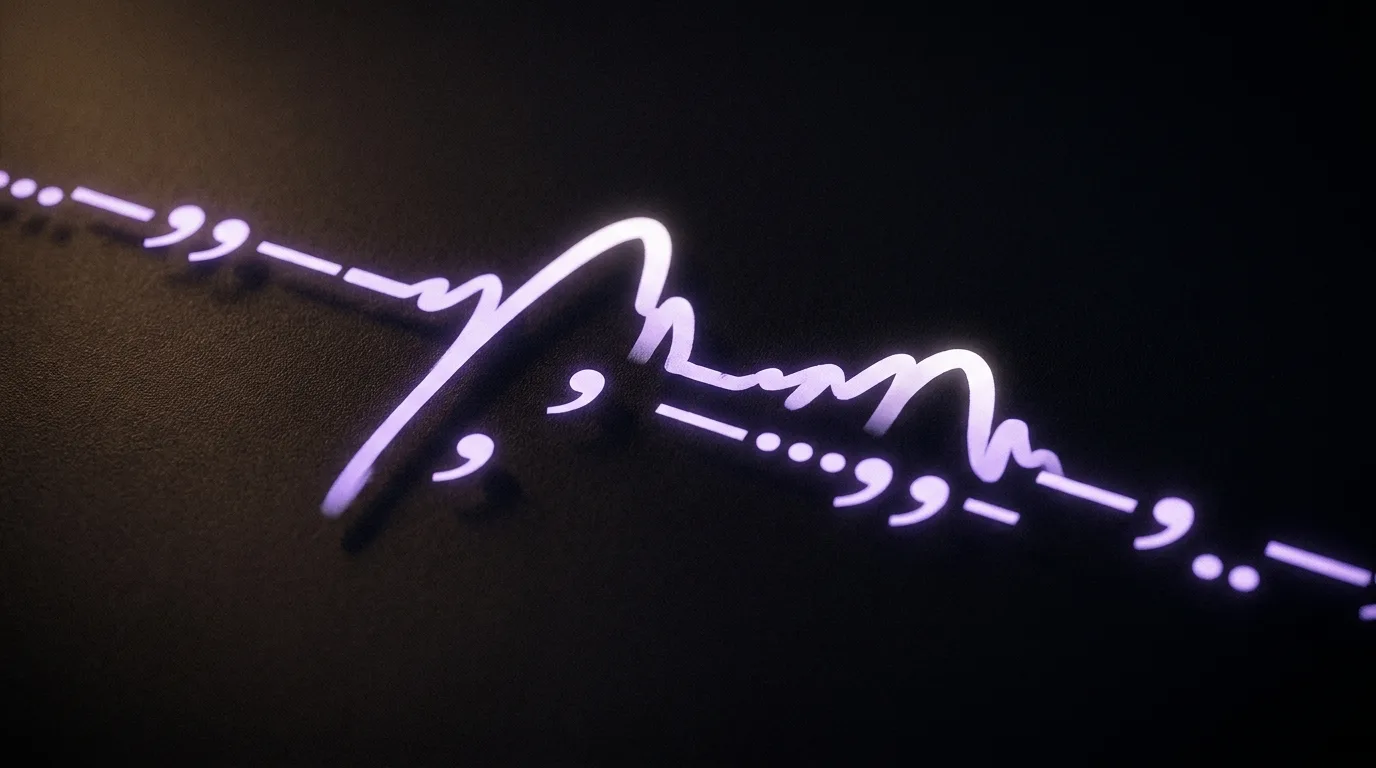
There's an aspect of writing that gets too little attention in courses and manuals, perhaps because it's hard to teach with precise rules, and that is rhythm. Not grammar, not plot, not characters. The way a sentence sounds when it's read, even just inside your head, without speaking it aloud.
How you learn to hear rhythm
I first became consciously aware of it while reading a novel that, on paper, told a fairly ordinary story, yet kept me glued to the page for reasons I couldn't identify at first. Only afterward, analyzing the sentences more carefully, did I understand that the author was constantly playing with the length of her periods, alternating very short, almost broken sentences with long, fluid ones that coiled back on themselves for entire lines. That constant variation created a kind of hidden musicality that the reader perceives at an almost unconscious level, even without being able to name it.
Punctuation as narrative time
Punctuation, in this game, plays a far more important role than it's generally given credit for. One comma more or less can completely change the breath of a sentence, slow it down or speed it up, give weight to one word rather than another simply by its position relative to the pause. The full stop, used often and decisively, creates urgency: sentences that land like punches in quick succession. Long periods, with subordinate clauses stacking one on top of another, communicate instead a sense of suspension, of dilated time, perfect for contemplative moments or for descriptions that want to envelop the reader slowly.
How to reread a chapter for rhythm
What I've started doing, now for some years, is reading every finished chapter focusing exclusively on rhythm, setting the content aside for a moment. I ask myself whether each paragraph breathes the way I want it to breathe at that point in the story. A tension scene written with long, contemplative periods sounds wrong even if every single word is the right one, because the body of the text contradicts the emotion the scene is meant to convey.
This kind of attention takes time, and above all it requires reading widely, not just for the content of other people's stories, but to consciously study how other writers construct their own rhythm. It's an ear that gets trained, exactly like a musical ear, and nobody is born already able to hear it perfectly. I'm still working on it, and I probably will be for the rest of my writing life.
Marghi
Pronto a scrivere il tuo prossimo capolavoro?
15 giorni gratis, nessuna carta richiesta.