How to Write a Novel Synopsis: A Step by Step Guide

Plenty of authors write an entire novel without much trouble, then freeze in front of a single page: the synopsis. It's a common paradox, because summarizing a story that runs 90,000 words into 500 feels impossible. In reality, a synopsis follows precise rules, and knowing them makes the task far less daunting.
Key Takeaways
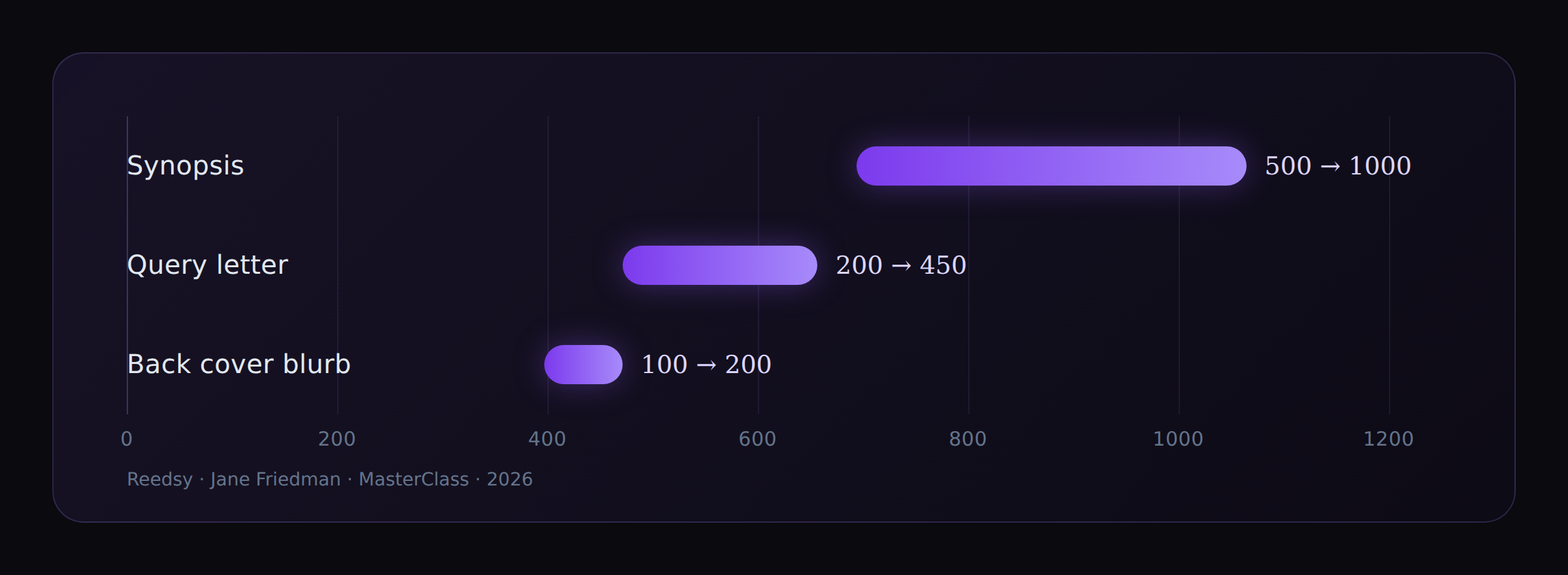
A standard editorial synopsis runs 500 to 1,000 words, one page or a bit more (Reedsy, 2026).
It must reveal the ending, it isn't promotional copy like back cover text.
It's written in present tense and third person, regardless of the novel's point of view.
It covers only the main plot and essential characters, not secondary subplots.
The most common mistake is treating it like a blurb, leaving the ending hanging.
What Is a Synopsis and What Is It For?
A synopsis is an objective summary of a novel's entire plot, from beginning to final resolution, that literary agents and editors use to judge whether a story works structurally before reading the full manuscript (Reedsy, How To Write a Book Synopsis, 2026). It isn't a marketing text: its only job is to prove the plot holds together.
That sets it clearly apart from the blurb, the text found on a back cover or product page. A blurb builds curiosity and hides the ending on purpose. A synopsis does the opposite: it reveals every plot turn, including how the story ends, because whoever reads it needs to judge whether the narrative arc holds up.
For the overall structure before summarizing it, see how to organize a novel.
How Long Should a Synopsis Be?
The standard length for an editorial synopsis is 500 to 1,000 words, the equivalent of one page, two at most (Jane Friedman, How to Write a Novel or Memoir Synopsis, 2026). Some agents ask for a shorter format, around 300 words, while others accept up to two pages for ensemble novels with more complex plots.
The practical rule is to always check the specific guidelines of the agent or publisher being queried, since they vary from one professional to the next. Absent explicit instructions, a single, single spaced page remains the safest choice.
How Do You Structure a Synopsis Step by Step?
An effective synopsis follows four blocks: the starting situation and protagonist, the inciting incident, rising obstacles up to the turning point, and the final resolution (Reedsy, How To Write a Book Synopsis, 2026). Each block roughly corresponds to an act of the novel's own narrative structure.
The first block introduces the protagonist, what they want, and what stands in their way. The second introduces the event that breaks the initial equilibrium. The third covers the protagonist's attempts and the complications that make them progressively harder. The fourth goes straight to the conclusion: how the story ends, with no ambiguity.
Anyone who already has a chapter by chapter outline of their novel starts ahead: at that point, the synopsis becomes more an exercise in selection, what to keep, what to cut, than writing from scratch.
For deciding which narrative arcs deserve space, see how to organize characters in a novel.
Which Characters Should You Include in a Synopsis?
Only the protagonist and at most two or three secondary characters genuinely relevant to the main plot should appear in a synopsis (Writer's Digest, How to Write a Synopsis When You Have Lots of Characters in Your Story, 2026). Every extra name the editor has to keep track of distracts from understanding the narrative arc.
Romantic or secondary subplots should only be mentioned if they directly affect the main plot or the ending. A parallel relationship that doesn't change the story's outcome can stay out, even if it fills entire chapters in the novel.
Do You Write It in Present or Past Tense?
A synopsis is always written in present tense and third person, even when the novel is narrated in first person or past tense (Jane Friedman, How to Write a Novel or Memoir Synopsis, 2026). This is an editorial convention, not a stylistic choice for the author to make.
Present tense creates an immediacy that makes the summary read more smoothly, and it's the standard agents and editors expect to see. Writing a synopsis in past tense or keeping the novel's first person voice reads as a formatting error, not a creative choice.
What Mistakes Should You Avoid When Writing a Synopsis?
The most frequent mistake is treating the synopsis like a promotional blurb, leaving the ending deliberately vague to build suspense (Writer's Digest, The Art of Writing a Synopsis, 2026). That behavior breeds distrust in the editor, who needs to judge the whole plot, not feel enticed to discover it.
A second common mistake involves paragraph length: synopses written as a single dense block of text, with no breaks, are far harder to follow than ones split into three or four distinct paragraphs, one for each stage of the plot.
The third mistake is including direct dialogue or extended atmospheric description. A synopsis summarizes events, it doesn't stage them: every sentence should move the plot forward, not recreate the novel's mood.
To keep the pace while writing the synopsis and the rest of the manuscript, see writing routine to finish a novel.
Frequently Asked Questions
Does a synopsis need to reveal the novel's ending?
Yes, always. Unlike a back cover blurb, an editorial synopsis must include the full resolution of the plot, because its purpose is proving the narrative structure works from beginning to end (Reedsy, 2026).
How long does it take to write a synopsis?
With a plot outline already in place, most authors can produce a first draft in a single focused work session. Without an outline, it takes longer because the main sequence of events has to be reconstructed first.
Should a synopsis be written before or after the novel?
In most cases, it's written after the manuscript is complete, so it summarizes the actual story rather than the planned one. Some authors sketch one during editing as well, as a tool to check plot consistency.
Do I need a different synopsis for every agent I query?
No, unless a specific length is requested. A well written 500, 1,000 word synopsis fits most standard requests, but it's worth shortening if an agent explicitly states a lower limit.
What happens if the synopsis doesn't convince the agent?
An agent evaluates the query letter first, then the synopsis, and only at the end the manuscript's opening pages. A weak synopsis can lead to rejection even when the novel itself is well written, because it signals structural problems the agent would rather not have to fix during editing.
In Summary
Writing a synopsis doesn't require extra storytelling talent, it requires discipline in selecting what actually matters in the plot. Four blocks, present tense, revealed ending, characters trimmed to the essentials: following this structure turns a task that feels impossible into an exercise in synthesis, not creative writing.
For the complete narrative structure to extract a synopsis from, go back to the guide on how to organize a novel.
Sources
Reedsy, How To Write a Book Synopsis: Complete Guide & Examples, retrieved 2026-08-30, https://reedsy.com/blog/how-to-write-a-synopsis/
Jane Friedman, How to Write a Novel or Memoir Synopsis, retrieved 2026-08-30, https://janefriedman.com/how-to-write-a-novel-synopsis/
Writer's Digest, The Art of Writing a Synopsis, retrieved 2026-08-30, https://www.writersdigest.com/the-art-of-writing-a-synopsis
Writer's Digest, How to Write a Synopsis When You Have Lots of Characters in Your Story, retrieved 2026-08-30, https://www.writersdigest.com/publishing-insights/how-to-write-a-synopsis-when-you-have-lots-of-characters-in-your-story
Pronto a scrivere il tuo prossimo capolavoro?
15 giorni gratis, nessuna carta richiesta.